
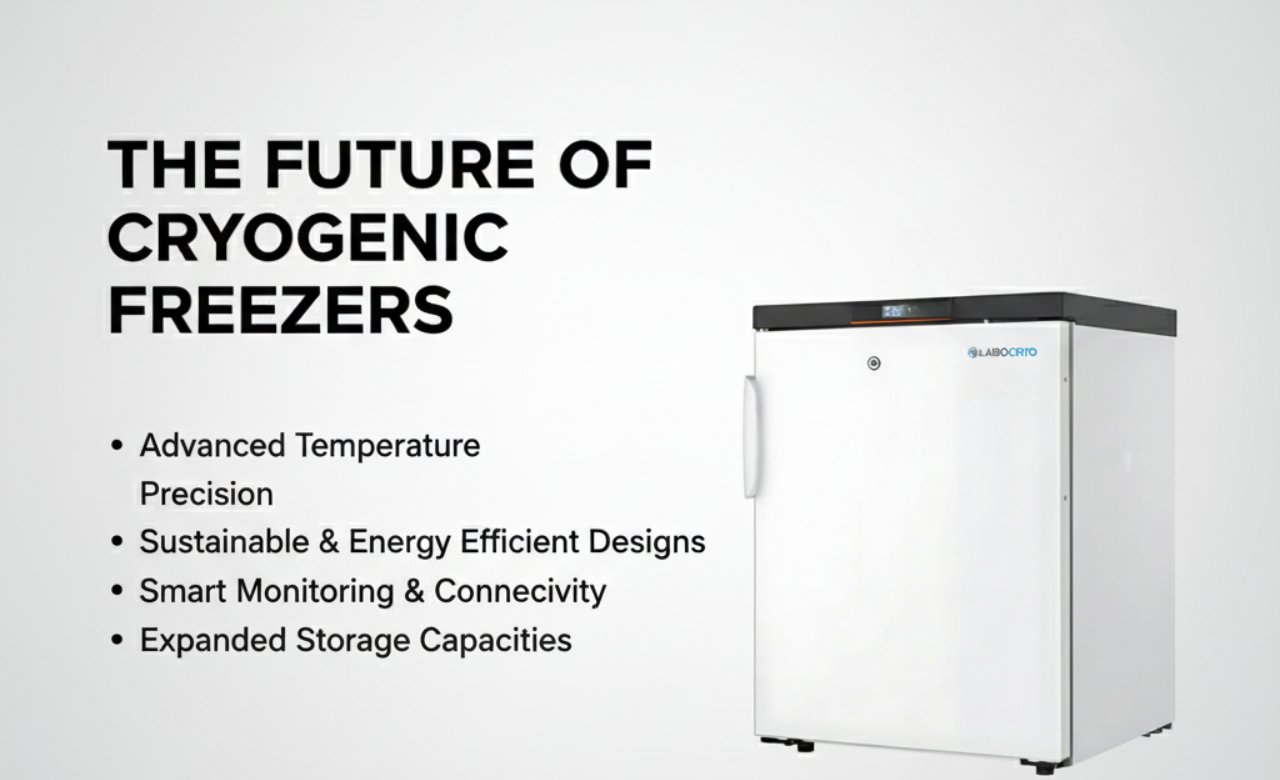
The Future of Cryogenic Freezers
In the world of modern science, preserving valuable biological samples, vaccines, enzymes, and tissues at ultra-low temperatures is critical. Cryogenic freezers, often operating between -125°C and -150°C, have become indispensable tools in laboratories, healthcare institutions, and industrial research centers. As research demands increase, traditional storage methods are being replaced by advanced cryogenic freezers that ensure unmatched reliability, precision, and sustainability.
Evolution of Cryogenic Freezers
Earlier cryogenic storage relied heavily on liquid nitrogen tanks, which presented challenges such as handling hazards, high operating costs, and limited automation. Today, modern cryogenic freezers combine advanced refrigeration technology, smart monitoring systems, and eco-friendly refrigerants, offering safer, more user-friendly, and cost-effective solutions.
Key Innovations in Cryogenic Storage
- Digital Control Systems – Microprocessor-based controllers with touchscreen displays allow precise temperature adjustments and real-time monitoring.
- Smart Alarms & Remote Monitoring – Labs can now connect freezers to monitoring software, receiving instant alerts for temperature fluctuations or power failures.
- Energy-Efficient Cascade Refrigeration – Advanced compressors and refrigerants like R290 ensure optimal cooling with lower energy use.
- Ergonomic Design – Stainless-steel construction, caster wheels, and optimized insulation make freezers durable and user-friendly.
- Eco-Friendly Approach – The industry is moving toward sustainable refrigerants, reducing the environmental impact of cryogenic storage.
Benefits for Research and Healthcare
- Secure Preservation – Protects sensitive biological materials for years without compromising quality.
- Regulatory Compliance – Meets strict global standards such as ISO and CE.
- Operational Efficiency – Reduces downtime and operating costs with advanced safety and monitoring features.
The Future of Cryogenic Freezers
The next generation of cryogenic storage will integrate AI-powered predictive maintenance, IoT connectivity, and smart energy optimization. These technologies will allow laboratories to anticipate failures before they happen, maximize energy savings, and ensure zero compromise on sample safety.
Conclusion
As the demand for long-term storage continues to rise, cryogenic freezers will play a pivotal role in advancing science and medicine. At Labocryo Scientific, we are committed to delivering cutting-edge cryogenic solutions that combine precision, safety, and sustainability—empowering researchers and healthcare providers worldwide.